
The Superbuy Spreadsheet, one category at a time
Every tile carries the door its category normally arrives through, so the fee, the check and the return path are visible before you click.
Browse by category, with the door each one takes
The hint under each tile is the door a listing in that category normally arrives through, plus the one thing the operator's rules single out about it.
 Tees and topsCategoryCapture door. Prints are what the standard three photos show best.
 Hoodies and sweatsCategoryCapture door. Tag sizes run on the 160/68A code; one size note saves a Pending confirmation.
 Caps and beaniesCategoryCapture door. Light, cheap to ship, and the usual filler when a parcel is under the first weight.
 Bags and totesCategoryCapture door. Bags get front, back and logo shots at the free check; inside the lining is a paid photo.
 Football shirtsCategoryCapture door. Name and number printing is a customisation: it needs a note line.
 Jackets and outerwearCategoryCapture door. Heavy items push the parcel toward the 10 kg commercial line; see costs.
 Trainers and sneakersCategoryCapture door. Shoe sizes on the card are the seller's; the foot-length chart is on the notes page.
 Joggers and sweatpantsCategoryCapture door. Same tag code as hoodies; ask for the inseam if the card has none.
 Denim and jeansCategoryCapture door. Waist and inseam are written as 29W x 30L on some cards and as 160/68A on others.
 Belts and bucklesCategoryCapture door. Belt length is a number the card rarely shows; the size note line covers it.
 Dresses and womenswearSearch resultsSearch results, not a category page. Sizing varies by store on these listings, so send your own measurements.
 Jewellery and chainsCategoryCapture door. Gold, silver and diamond pieces are on the operator's sensitive list for customs.
 Sunglasses and framesCategoryCapture door. Prescription lenses are outside the free check by name; see after you pay.
 WatchesCategoryCapture door. A watch is checked for appearance only; it is not wound or powered on.
 Audio and gadgetsCategoryCapture door. Power-on is a paid check; built-in batteries limit which routes will carry it.
 FragranceCategoryCapture door, sealed. The warehouse does not open a sealed bottle, and some routes refuse liquids.
Definition
An entry, and what stays on the listing it points at
A product-listing site you browse by category: each entry is a picture, a name, the platform the listing sits on, and a link. You open a find, you copy its link, you paste it into Superbuy. That is the entire relationship between the catalogue and the agent. Nothing is bought on the catalogue, nothing is stored there, and the price on a card is the price somebody saw on the day they added it.
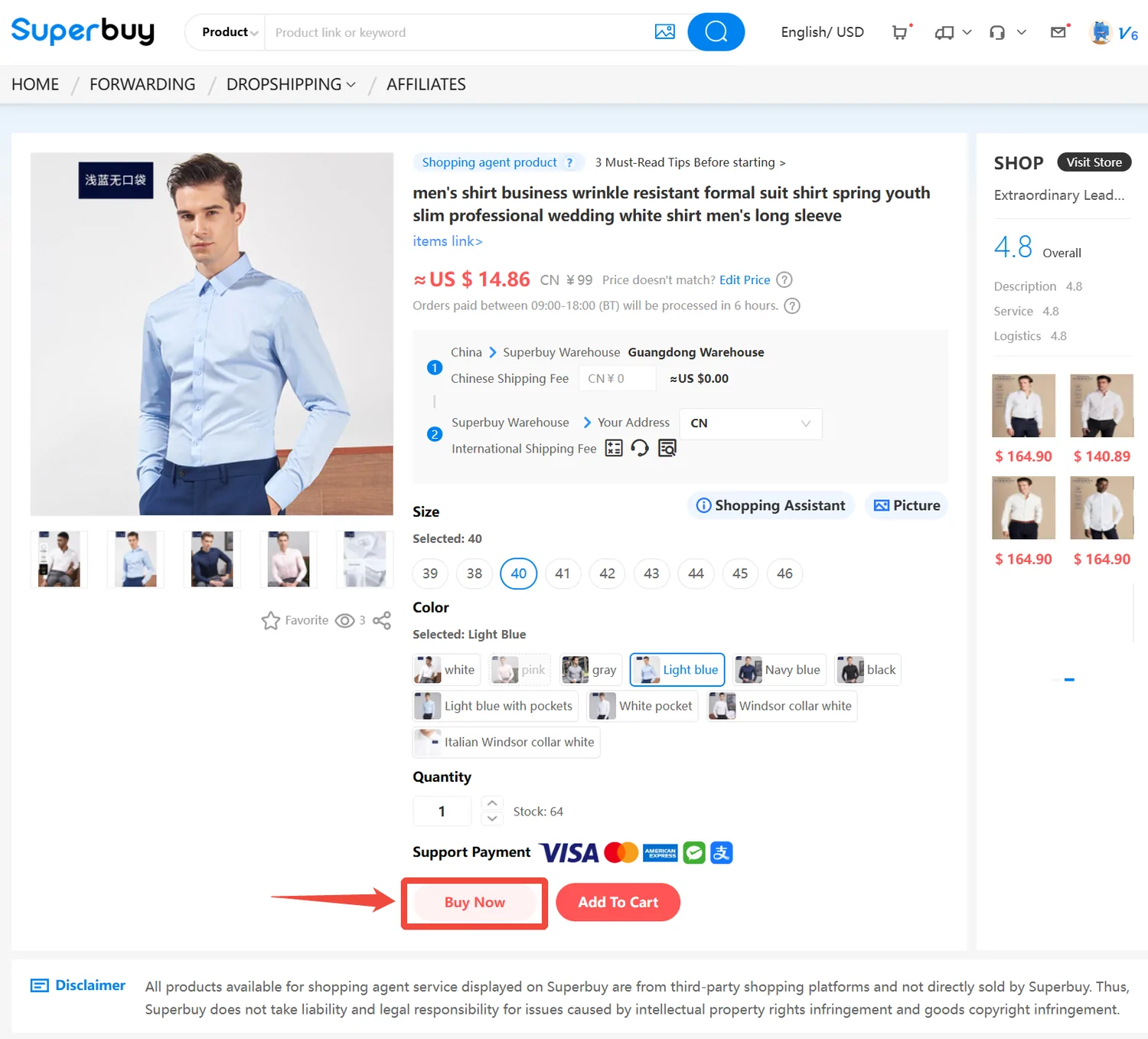
The captured listing in the picture is what the link becomes on Superbuy's side: the seller's own colour swatches, the seller's size run, a quantity box and two buttons. If you have never seen that screen, it is worth knowing that the sizes are the seller's labels, not converted ones, and that the Shopping Assistant link above the size row is where the operator's size help lives.
The catalogue is strongest for things a photograph settles and a tag size does not complicate: tops, caps, bags, speakers. It is weakest where a card cannot carry the one fact that matters, which is why the hints above mention inseams, belt lengths and sealed bottles.
Picking
How to pick a listing that goes through its door cleanly
Three habits that keep an order moving, each one aimed at a message the buyer would otherwise have to send you.
- Read the size as the tag writes it. A Chinese clothing tag reads
160/68A: height 160 cm, bust or waist 68, A for a regular cut. Jeans may read29W x 30Lin inches. The operator's own size article explains both codes and adds a rule for shoes: measure in the afternoon, use the larger foot, and go up half a size if your foot is wide, because Chinese shoe sizes carry no width. help centre 1201, read 2026-10-10 - Count what the card cannot show. A belt length, a strap drop, an inseam, a wattage. If the listing does not state it, the size line in the notes box gets the buyer to ask, and a detailed photo with a tape (CN¥2 per photo) proves it after arrival. help centre 1183, 1112, read 2026-10-10
- Look at the platform before the price. A Weidian listing gets three extra detailed photos free at the warehouse; a Xianyu listing adds CN¥20 and usually cannot be returned; a 1688 listing has a minimum quantity. The same jacket at the same price is a different order on each. help centre 3502, 1445, 1048, read 2026-10-10
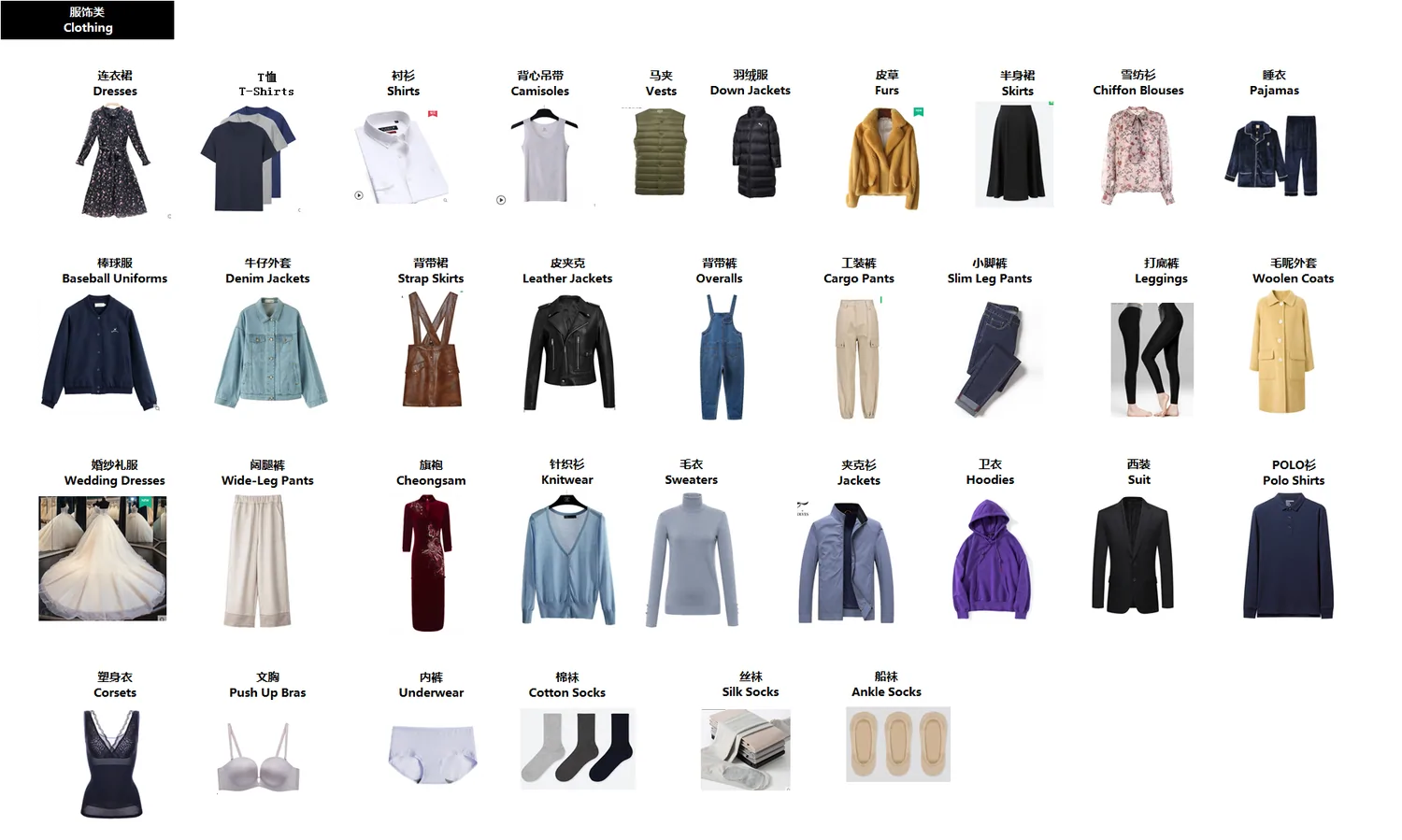
The operator also keeps bilingual boards of product names by category, like the clothing board in the picture. They are the fastest way to recognise a term in a listing title, and the glossary on the help page points to the ones that matter for ordering.
Judging
Choosing a trustworthy spreadsheet, by what it refuses to hide
Four things separate a catalogue worth using from one that is quietly rotting, and all four are visible in a minute.
- Does the card say which platform the listing is on? If not, you cannot know the door, and a Xianyu listing will surprise you with a CN¥20 fee and no return.
- Do the links still resolve? Chinese listings come down constantly, and a catalogue that is not re-tested turns into a list of 404s without anyone noticing. Pick the oldest-looking entry in a category and try it; if that one is dead, assume the category is. This site re-tests every outbound link at build time and dates the run on the updates page.
- Does it print prices as if they were current? The price on a card is a snapshot. A site that promises a price is promising something it cannot deliver; the listing decides.
- Does it tell you what to do after the click? A catalogue that ends at the link leaves you to discover the manual form, the notes box and the Pending confirmation on your own. That gap is what the pages here fill.
Why this spreadsheet: it does the four things above, it is maintained by hand, and it does not pretend the catalogue is more than a finding tool. The footwear board in the picture is the kind of operator material it leans on instead of inventing its own.
Fit
Where a hurried order costs you, and where it does not
Some categories forgive a quick order and some do not. Caps, T-shirts, speakers and bags mostly arrive as pictured; the standard three photos cover them. Jeans, belts, eyewear and anything sealed need one more line in the notes or one paid photo, because the thing that goes wrong is a number the card never had.
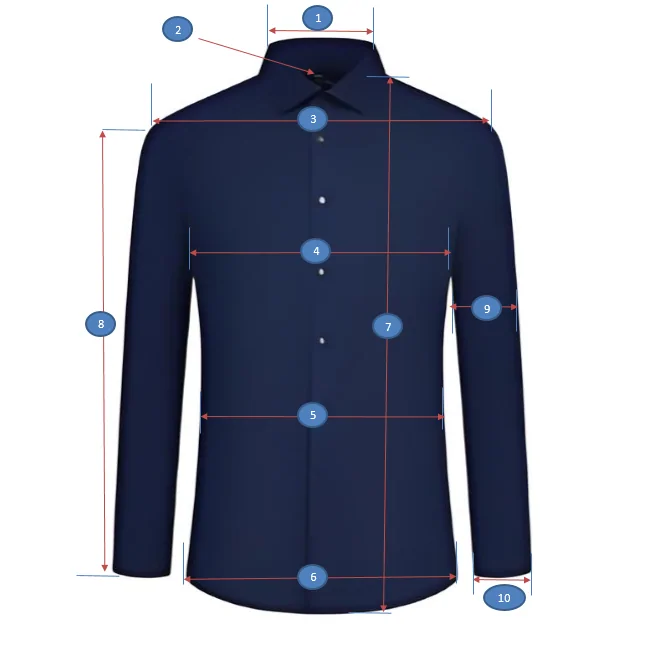
The shirt diagram in the picture is the operator's own list of measurement points for a detailed photo: ten positions, each one a number a buyer can read off a tape. If you are between sizes, two of those points cost CN¥4 together and settle the question before the parcel leaves. The size section on the notes page has the charts, and the photographs are what confirm them after arrival.